
“Go not to the Elves for counsel for they will answer both no and yes.” –J.R.R. Tolkien
On one hand, I have played many wonderful games of D&D that required no maps, minis, and very little dice rolling, even. So no, you don’t need miniatures to play D&D or most other TTRPGs.
And yet.
I’ve also run a ton of games that would not have been possible without using a rudimentary map and miniatures. What we’re really getting at here is the larger question of whether you should be using “theatre of the mind” or physical representations of your TTRPG locations and encounters.
Theatre of the Mind vs. Physical Minis and Maps
But it’s not IF you should use theatre of the mind or miniatures, it’s WHEN.
If you have a tendency to over-prepare as GM (like me), know that you don’t need to have a map and miniatures of every scene. This isn’t just being lazy. Don’t limit yourself to what you’re able to create in physical art when it comes to describing your cities or scenery. As GMs, our medium as artists is imagination, and you should make full use of it.
If a scene is unlikely to break out into combat or has a simple setting that’s easy to imagine, I typically don’t make a map. I walk the players through a general layout and description, and we clarify during the scene if we need to. Games or systems that are more focused on intrigue or social interactions may be able to get by without any maps or miniatures. Tables that play together for a long time also often develop a shared language and may also be able to get everyone on the same page without a physical representation.
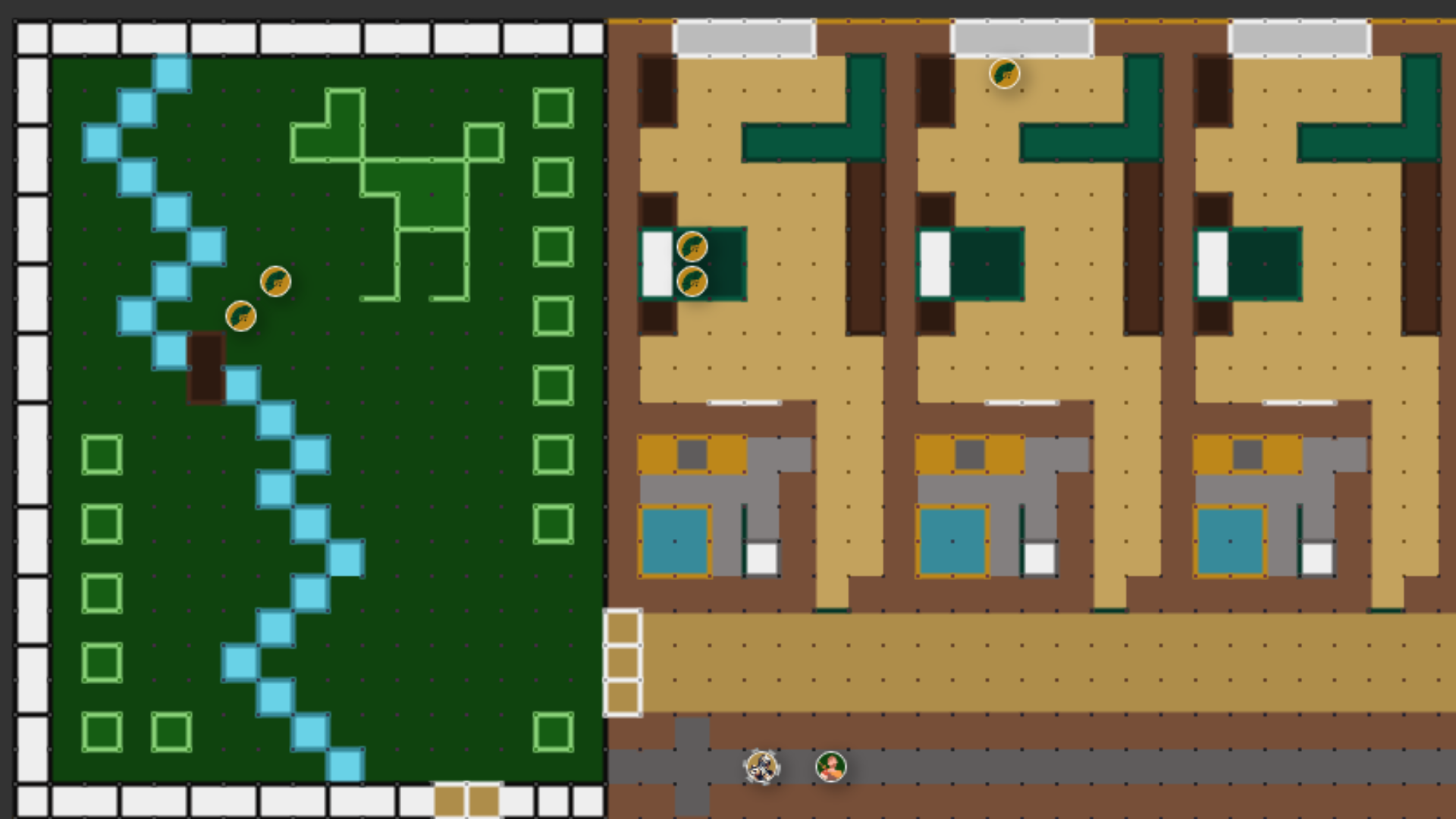
A simple battle map like this one helps establish what the location looks like, and where the secret passages in the walls lead.
However, if you’re playing with a new table, it can be really helpful to have even just a basic map. This game relies on a shared imagination space, and it can sometimes be difficult to correctly imagine what someone is describing to you, especially if it gets complex. It’s also worth mentioning that some classes may be more affected by going mapless than others. Rogues and monks, for example, are more reliant on high mobility. So it’s really going to matter to them whether an enemy is five feet one way or the other.
Providing a map and miniatures also allows for moments of cleverness and creativity on your players' part. If you haven’t described a tree, but there’s clearly one on the map, it rewards players who are paying attention enough to declare that they’re using the tree for cover when that fireball goes off.
Maps and miniatures also allow you to create complex dungeons, mansions, or cities for the players to explore. When I’m running a heist or a dungeon crawl, I absolutely need a map. For me, there’s just too many moving parts, and I need the map to hold some of them.
Do you need maps to play D&D online?
This one is a little more definitively a yes. It’s much easier to miss or misunderstand part of a description when playing in online games. For me, they’re a necessity for running online TTRPGs. I recommend using a virtual tabletop that prioritizes connectivity and ease of use. The one I can personally recommend is Shmeppy. My online games couldn’t run without it.
What kind of minis and maps work best?
Now, I don’t want you to think that I’m in the pocket of Big Map. You don’t need to shell out for expensive battle sets, maps, or virtual tabletops (though supporting small creators is always nice). And you don’t need to be an artist to get your point across.
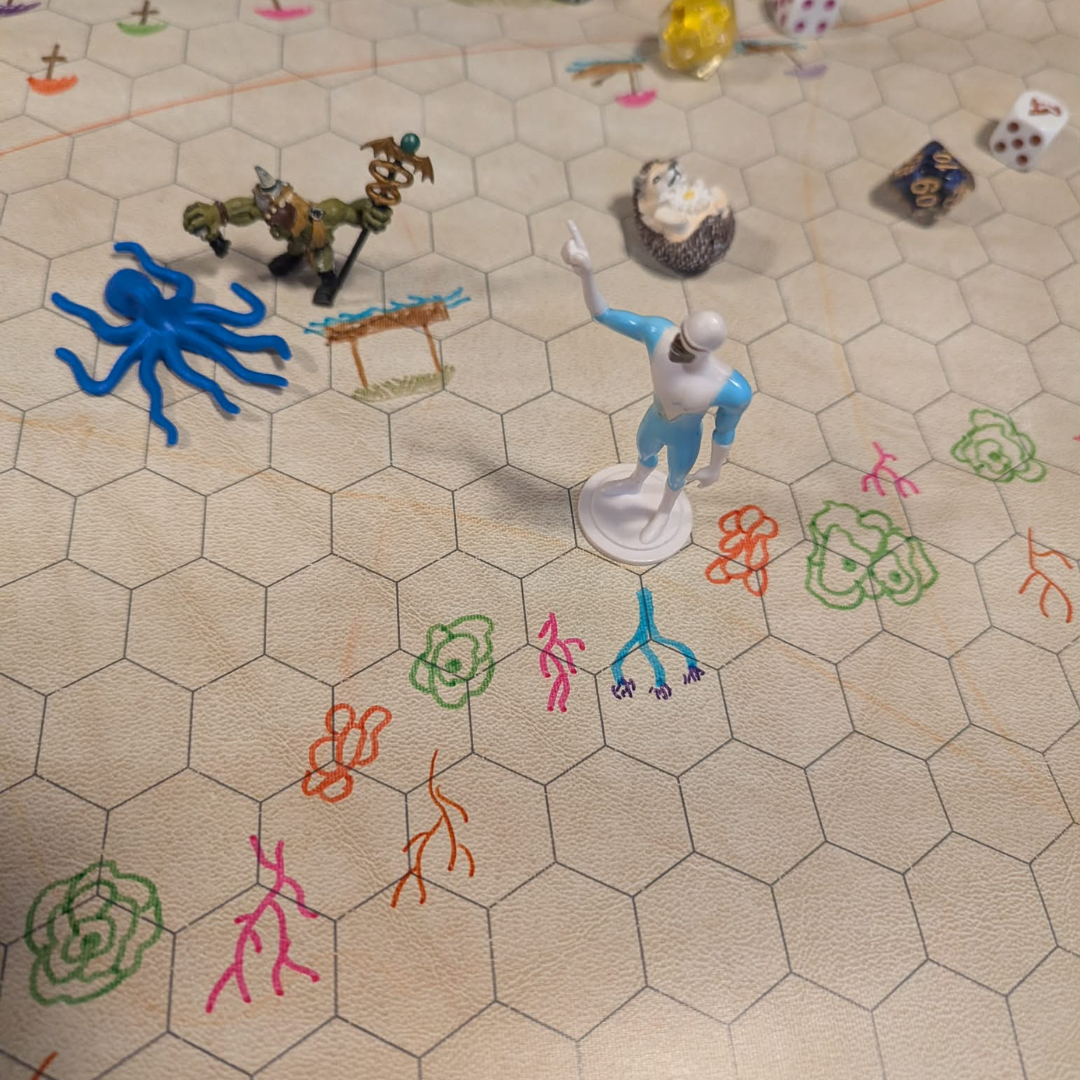
Exhibit A:
This is a map from a game I recently ran. It’s very simple, but easy to understand. And we had an absolute ball in those sessions. Now, did I have to Google some clip art of coral reefs?
Yes. But did some players go “Ooo coral!” when I flipped the map over? Also yes!
I could buy a fancy map of a coral reef and print it out, but for me, there’s a magic in a bad sketch of a setting or village. I’m showing you a basic representation of it; you can get an idea of the scale and some features. But I need to fill in the gaps for you so you know that the trees around you are filled with fragrant apple blossoms, or that the coral reef starts to glow as the sun sets.
You can do this with a more artistic map, sure. But I like that I’m forced to do it with my sketch maps. And I know that magic is working because, likewise, you don’t need expensive miniatures to get your players invested.
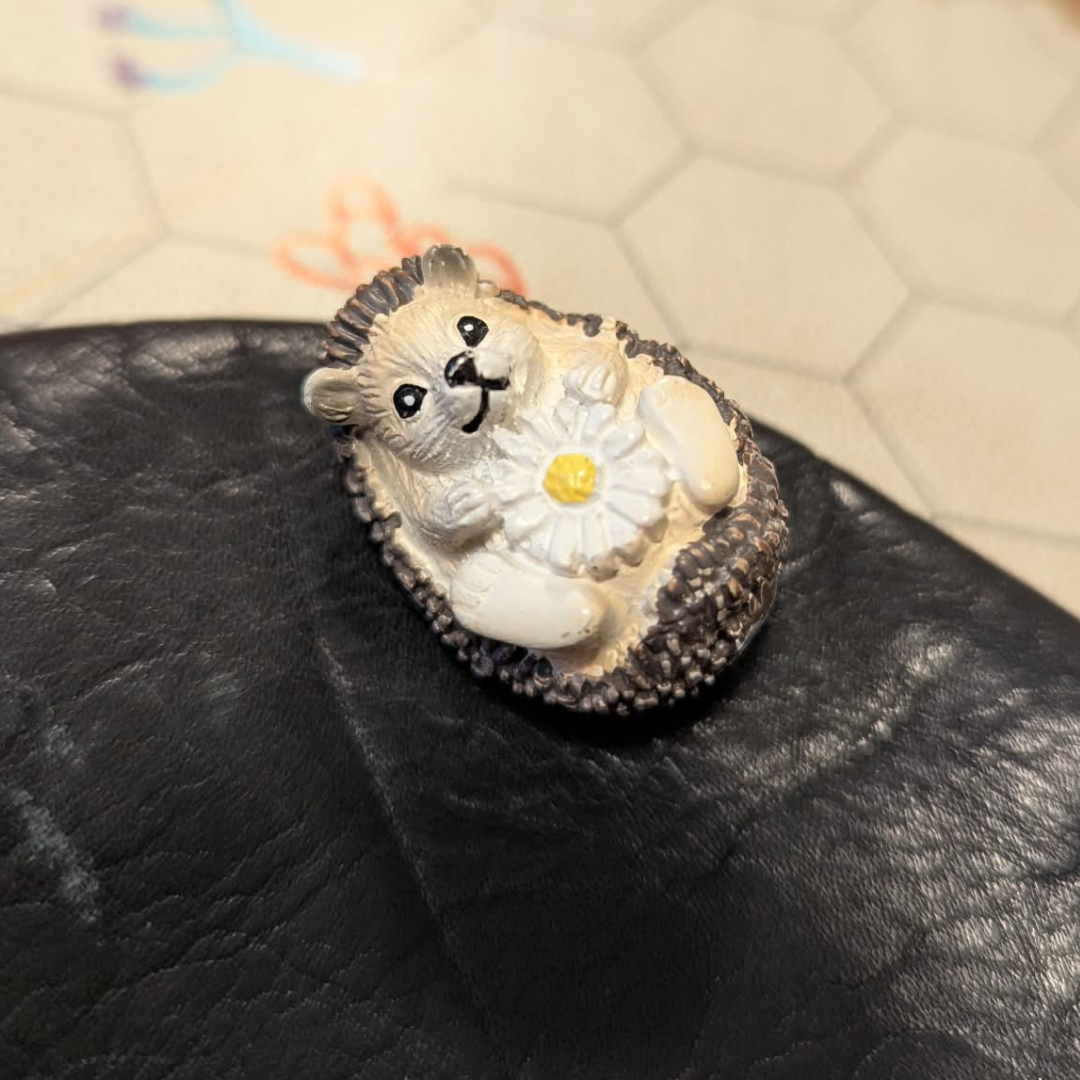
Exhibit B:
Pictured here is the number one most chosen miniature in all of my home and professional games. And they win by a landslide.
Barbarians. Druids. Bards. Everyone loves this little hedgehog. They don’t even sit upright. It’s way harder to use them as a mini, but they’re in every game I run.
Whether it’s D&D, Monster of the Week, or Honey Heist — we’re all just playing pretend. We just wanna play with our little guys in a sandbox and agree this is a fort and here is the river and this soda can is actually a giant slug. Oh no, watch out, he’s gonna eat you!
Leaning into that impulse and telling your player that, of course, they can be the little hedgehog is a real shortcut to childlike wonder. So I highly recommend just using any random action figure or little trinket for D&D miniatures.
This article was written by one of our board members at the Chicago Tabletop Gaming Association. If you’d like to be a part of conversations like these, use the button below to be invited to our Discord server!

The information in this blog and on www.chicagotga.org is presented for educational and entertainment purposes. Any statistics, recommended products, or other information is researched in good faith, but no warranty is made to the completeness nor accuracy of the source. All written and multimedia content published here is the intellectual property of Chicago Tabletop Gaming Association (CTGA) or contributing community members and is not for reproduction or sale by third parties. By accessing this site and all its materials, you agree to and acknowledge these terms.
