There is a particular kind of quiet that falls over a table when a player says, almost too casually,
"I think my character actually uses they/them pronouns.”
It is not an announcement or a Big Moment. It is the sound of someone trying something on in the safest room they could find. A room where the rules already say you are allowed to be someone else for a while, and where the friends around you have already agreed to take whatever you bring seriously, even if it shows up wearing a beard, fangs, or a name they haven't heard before.
Pride is a month that asks us to celebrate, and we should. But it also asks us to notice the smaller, quieter scaffolding that holds queer identity up. We need to look to the spaces, practices, and people that let us figure out who we are before we say anything out loud. For a lot of us, the tabletop is one of those spaces, and I do not think that is an accident.
Play as rehearsal
Philosopher John Dewey argued that we don't think our way into new identities; we practice into them. Habits, experiments, small repeated acts. We become by doing, and we learn what we are by trying things and noticing how they sit. Tabletop RPGs are practically engineered for this. Every session is a low-stakes laboratory where you can pick up a self that isn't quite yours, walk around in it for four hours, and see how it feels. Sometimes it is just play. But sometimes (and this is the part that matters) the costume turns out to fit.
I have watched players come out at the table before they came out anywhere else. Not always with a speech. Sometimes it was a paladin whose pronouns quietly shifted between sessions. Sometimes it was a bard who started flirting with the same-gender NPC and then, three weeks later, with a same-gender person. The dice did not make any of that happen, and they did not confuse themselves with their character, ala Satanic Panic caricatures of D&D.
At the table, players can play with, identity, and flex expressive muscles their daily lives often do not have the space for normally. Whether that’s gender, sexuality, or just taking less guff from authority figures, the “pretending” we do in games can be some of the best training to be bold in our own lives.
If any of this resonates and you're not sure what to do with it, here is a low-stakes practice. At your next one-shot or convention game, give yourself permission to leave something unspecified on your character sheet. Maybe it is gender. Maybe it is your character's history with romance. Maybe it is the pronoun you use for yourself when you describe what your character is doing. You do not have to commit to anything past the session. The character sheet gets shredded or filed away at the end of the night, either way.
This is the gift of a one-shot, specifically. A home campaign carries continuity, but a one-shot is a four-hour window in which you can be a person you have never been before, with people who will never see you again, in service of a story that ends when the pizza arrives. That is, mechanically and emotionally, a rehearsal space.
The party as a soft landing
What makes the tabletop different from other identity sandboxes like fiction, fantasy, daydreaming alone in your car, is that it is witnessed. There are other people at the table. They are watching and responding. They are calling your character “she” without flinching or noticing your rogue's crush on the innkeeper without making it weird.
That witnessing matters because identity is not something we work out purely in our own heads. We work it out in relationships, in the small mirrors other people hold up. A good table is one of the most generous mirrors a person can find. For queer players, and especially for players still in the long middle of figuring it out, that is enormous.
The table does not require you to have language for what you are doing. It just requires you to keep making choices, seeing the impact, and deciding a new choice from there.
Worlds where we already won
There is also something quietly radical about playing in worlds where the question was never on the table to begin with. In most modern ttrpgs settings, no one is asking whether two women can get married, or whether a nonbinary cleric is allowed to lead a temple, or whether the elf and the dwarf should be discreet. The cultures of the games (i.e. Daggerheart, Yazeba’s Bed & Breakfast, much of modern D&D, basically all of the indie scene) have largely decided that these are settled questions. The conflict is elsewhere. The dragon is elsewhere.
That is not escapism. Or rather, it is escapism in the Tolkien sense, which is the escape of a prisoner, not the flight of a deserter. To spend an evening in a world where your existence is not the controversy is to rest. And rest is what lets people come back to their lives with more strength than they left it with.
For players who have spent the week being a problem to someone else, four hours of being a hero instead is a kind of medicine. And for players who are not queer but who play alongside us, those same four hours are a kind of practice too. It’s practice believing and learning to treasure a world where everyone's full humanity is just the baseline.
What this asks of us
If the table can be this for people, then we who run tables and build communities have a job. Use the pronouns on the character sheet. Ask new players what they go by before you ask anything else. Let characters be unspecified until they aren't. Don't make the queer NPC the joke or the lesson or the tragic sacrifice. Use safety tools so that the people who need them most know they will not be left exposed. Stock your shelves with games written by queer designers and run them.
None of this is heavy, and most of it is just paying attention. But it is the kind of paying attention that adds up to a room where someone can put down a character sheet, look up, and say a true thing about themselves for the first time. That is not a bad way to spend a Saturday night. That is not a bad thing for a hobby to be for.
The thing about play is that we tend to undersell it. We say just a game. Just pretend. Just dice. But anyone who has ever rolled up a character and felt a small click of recognition knows there is no just about it. Games are one of the oldest tools we have for becoming. It is true now for the kid at a folding table in Logan Square who is about to introduce their character with a pronoun they have never said out loud before.
Happy Pride. Be kind to whoever shows up at your table, including and especially, the version of yourself who might still be on the way.
Still looking for the right table? Come join us!
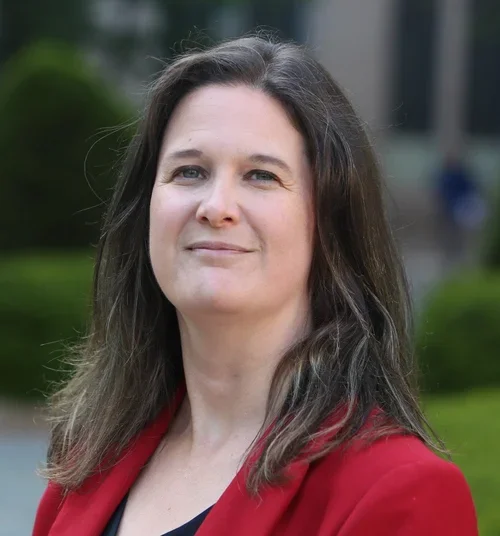
This article was written by Susan Haarman, PhD, a board member of the Chicago Tabletop Gaming Association. If you’d like to get more involved with the LGBT+ tabletop community, check out our events page and come hang out on our Discord!

Disclaimer: The information in this blog and on www.chicagotga.org is presented for educational and entertainment purposes. Any statistics, recommended products, or other information is researched in good faith, but no warranty is made to the completeness nor accuracy of the source. All written and multimedia content published here is the intellectual property of Chicago Tabletop Gaming Association (CTGA) or contributing community members and is not for reproduction or sale by third parties. By accessing this site and all its materials, you agree to and acknowledge these terms.