
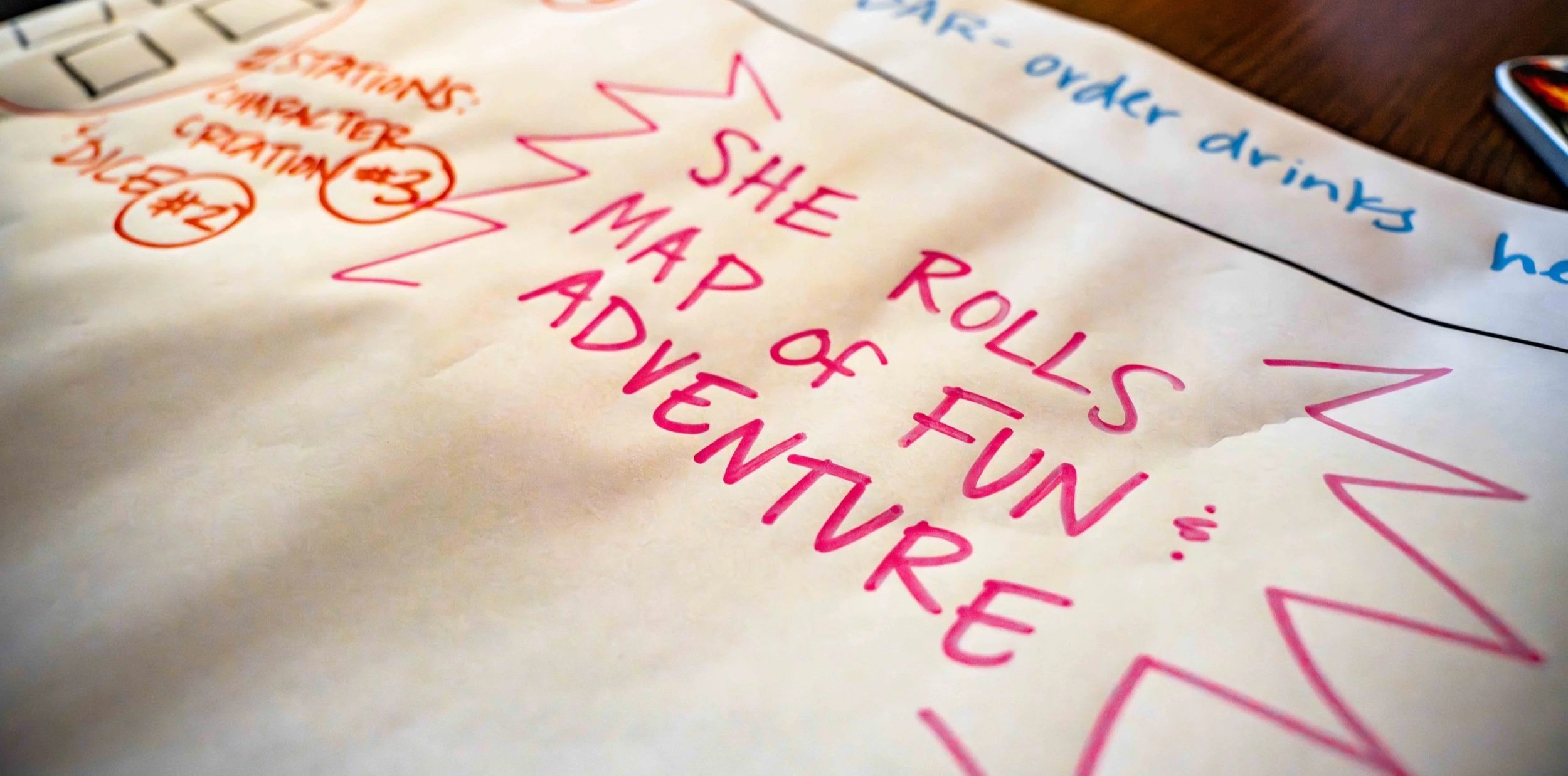
All photography of the She Rolls Initiative was taken by Zack Keltner.
There is a particular kind of person who has been adjacent to Dungeons & Dragons for years without ever quite playing it. She may have watched Critical Role while eating dinner on the couch or played Baldur’s Gate 3 and discovered that the thing she liked most was not necessarily the combat but the strange pleasure of becoming someone else for a while. She may know what a dungeon master does. She may know that the funny-shaped dice have names. She may even have a character concept that she has been carrying around, privately, for an embarrassing amount of time.
What she may not have is a community.
This was somewhere in the back of our minds when Lindsay Keildeen and I began thinking about She Rolls Initiative, an event we developed through the Chicago Tabletop Gaming Association. The CTGA had been doing a good job of attracting people who were already deeply embedded in the hobby: game masters and dungeon masters, game designers, artists, organizers, people who knew what they were doing and, occasionally, people who knew what they were doing with a confidence that made the rest of us suspect they had invented tabletop gaming themselves.
This is, of course, one of the natural tendencies of a hobby organization. The people who are easiest to find are often the people who are already there. But, if you want a community to last, you have to think about the people who are still standing outside of it.
We wanted to make an event for players, particularly new players and people who had never had an easy opportunity to play a tabletop roleplaying game. We wanted to make the invitation unusually explicit: women, femmes, and gender-expansive adventurers who feel at home in women’s spaces were welcome. You did not need a résumé. You did not need to know the rules. You did not need to have a favorite edition, a miniature collection, or an opinion about whether elves are boring.
You could simply come in.
A Brief Defense of D&D
Let’s define our terms. When I say D&D here, I mean both the game—specifically the contemporary fifth-edition ruleset—and the larger cultural idea D&D has come to represent.
There are, of course, people who will argue that this is playing into the monoculture, or that I am somehow undermining the hobby by treating D&D as representative of TTRPGs more broadly. Here’s the thing: yes, there are a lot of tabletop roleplaying games. This is something that people who play tabletop roleplaying games are generally very excited to tell you. There are games with elegant mechanics and games with terrible mechanics that are nevertheless fun; games about horror, romance, politics, farming, space travel, doomed expeditions, and, probably, the emotional lives of municipal zoning officials. Depending on your taste, you may believe that D&D is the best of these games, or merely the largest.
We chose it for a simpler reason.
D&D is the emblem of tabletop roleplaying. If you ask someone on the street whether they have played a tabletop roleplaying game, you may have to explain what you mean. If you ask whether they have heard of D&D, there is a good chance they will say yes.
D&D occupies the same place in tabletop gaming that Kleenex does among facial tissues: its name has become shorthand for the whole category. This is a useful thing to possess when you are trying to get someone through a door. We were not attempting to settle the question of which roleplaying system was superior, a question that can consume astonishing amounts of time among people who are otherwise perfectly pleasant. We wanted something with enough cultural capital that a person could encounter the name and think, Oh, I know what that is.
D&D, in all its forms, has become remarkably difficult to avoid. For a game that once occupied a fairly narrow corner of American nerd culture, it now exists in an enormous cultural ecosystem. Stranger Things made it part of the vocabulary of people who had never played it. Critical Role and Dimension 20 turned the act of watching other people play a game into entertainment in its own right. Baldur’s Gate 3 introduced millions of people to the pleasures of building a character, making questionable decisions, and discovering that somewhere beneath the statistics and menus is the peculiar freedom of roleplaying.
The game is more accessible than it has ever been. But the question of who feels comfortable walking up to the table is older.
An Invitation to the Table
For people who encountered tabletop gaming in the ’80s and ’90s, the physical world of the hobby could be remarkably specific. The books were sold in comic shops and game stores, beside Magic: The Gathering cards and Warhammer miniatures. The people selling them were usually men. The people depicted on the covers were usually men (or nearly nude women with wildly exaggerated proportions). And the people who seemed to know what they were doing were, very often, men.
D&D did not have to explicitly prohibit women in order to become something that felt like it was for men. Advertising is powerful in this way. So are spaces. So is the peculiar social authority of the person who has been doing something long enough to know where everything is kept.
Gary Gygax, one of D&D’s creators, supplied his own explanation in a 2005 online forum post, arguing that biological differences in brain function meant women did not receive the same satisfaction from tabletop roleplaying games as men. There is something almost charmingly retrograde about the confidence of this theory: faced with the observation that fewer women seemed to be interested in D&D, he reached for neuroscience rather than wondering whether women had been given much reason to believe the hobby was theirs.
It was a familiar cultural arrangement. Video games were for boys. Computers were for boys. Comics were for boys. Fantasy was for boys. And, of course, there were always girls and women who liked these things anyway. We heard from some of them at She Rolls. The point is not that women were absent. They weren’t. The point is that many of the women who participated had to work harder to make themselves comfortable there. And then, when fewer women showed up, that absence could be taken as evidence that women simply weren’t interested. The possibility that the environment itself might have something to do with who felt comfortable participating was easier to overlook.
But now? The Internet changed the geometry of this. You could find people without knowing people. You could watch someone play without having to walk into a store. You could learn the rules privately, in your second-string sweatpants, without risking the humiliation of asking what a d20 was in front of a group of people who had apparently been born knowing.
At the same time, geek culture became mainstream enough that the old distinction between the people who were “into” this stuff and everyone else began to dissolve. The people who grew up hiding their Star Wars novels under their beds became adults with disposable income. The things that had once marked someone as weird became television franchises, blockbuster games, podcasts, conventions, and extremely successful businesses.
There is something genuinely lovely about this expansion. There is also something funny about the way it has happened. D&D can now be simultaneously the most famous tabletop roleplaying game in the world and something that an adult woman can still feel slightly embarrassed to admit she wants to play.
You Don’t Need a Lanyard
The Chicago Tabletop Gaming Association has its own version of this problem: the name alone can sound more official than we intend it to. Tabletop Gaming Association suggests deep domain experience, perhaps a conference room, possibly a person with a lanyard who will ask you to fill out a form.
But what qualifies someone to belong to an association of tabletop gamers?
Does reading Drizzt Do’Urden fanfiction at 3 a.m. on AO3 count? What about playing one campaign five years ago? What if you have played 1,013 hours of Baldur’s Gate 3 but have never sat down at an actual table? What if you own the books but have never opened them because you are still waiting for your friends to stop saying they will definitely get a campaign going this summer?
The answer is yes. You are allowed to be here. That was the feeling we wanted She Rolls to have.
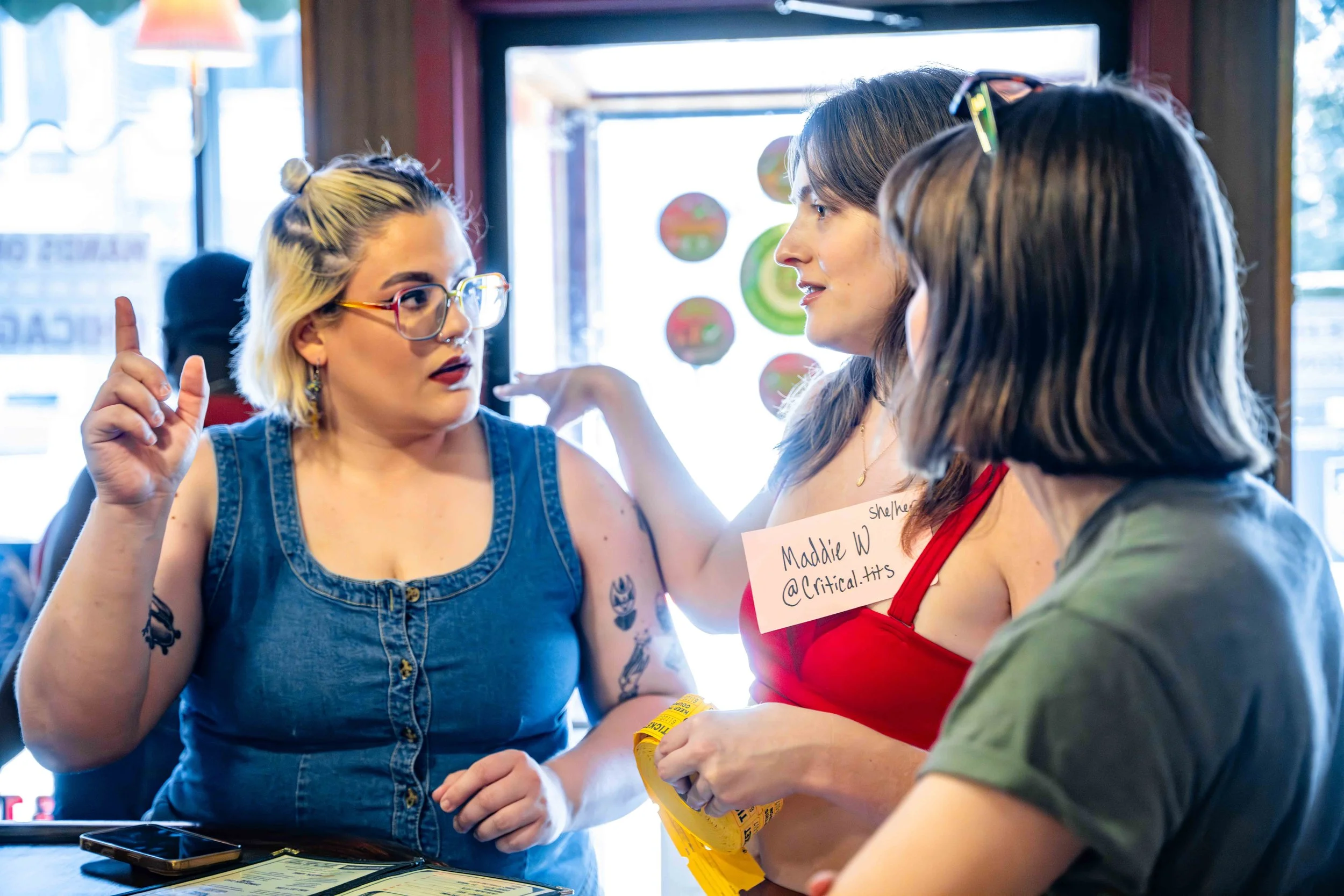
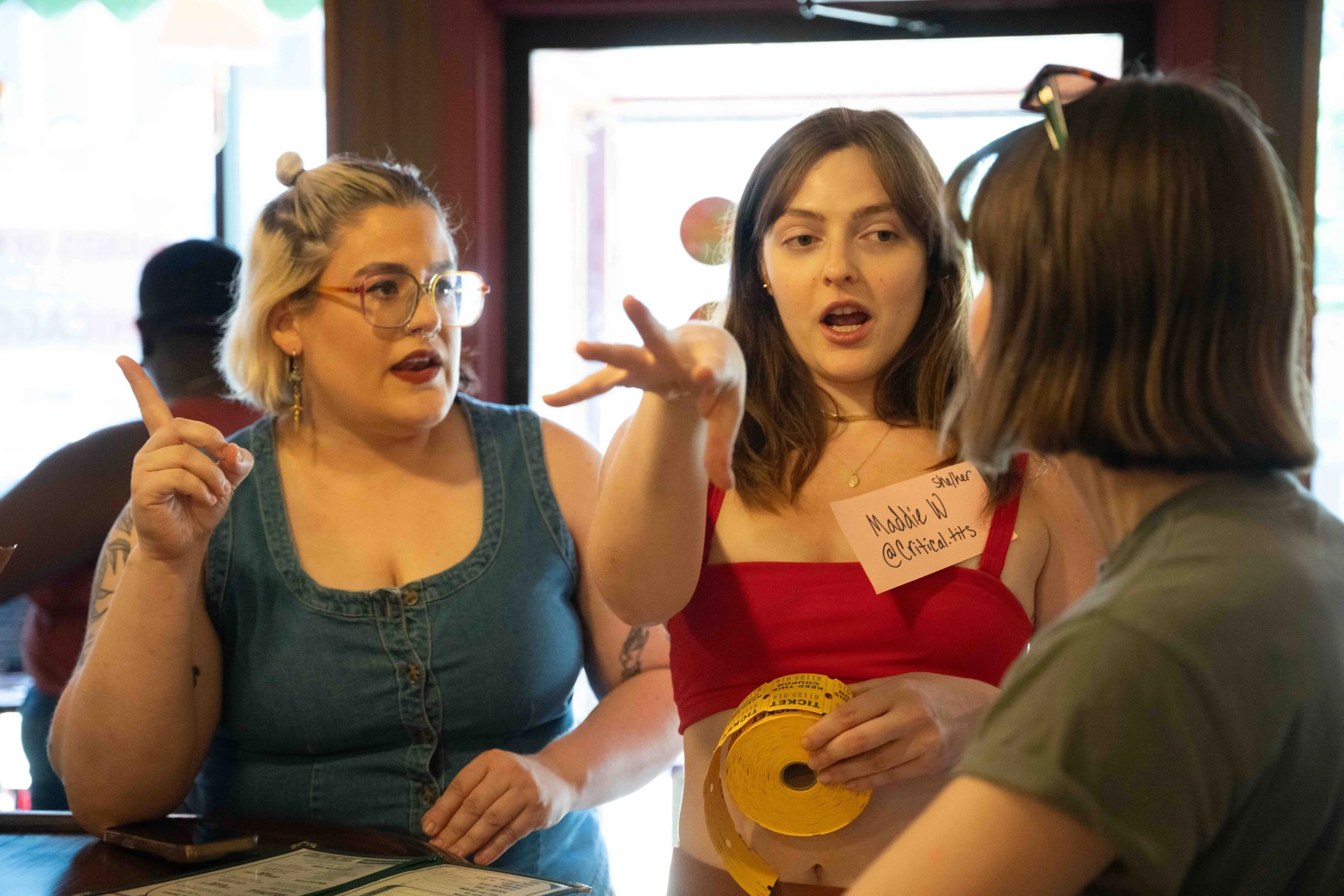
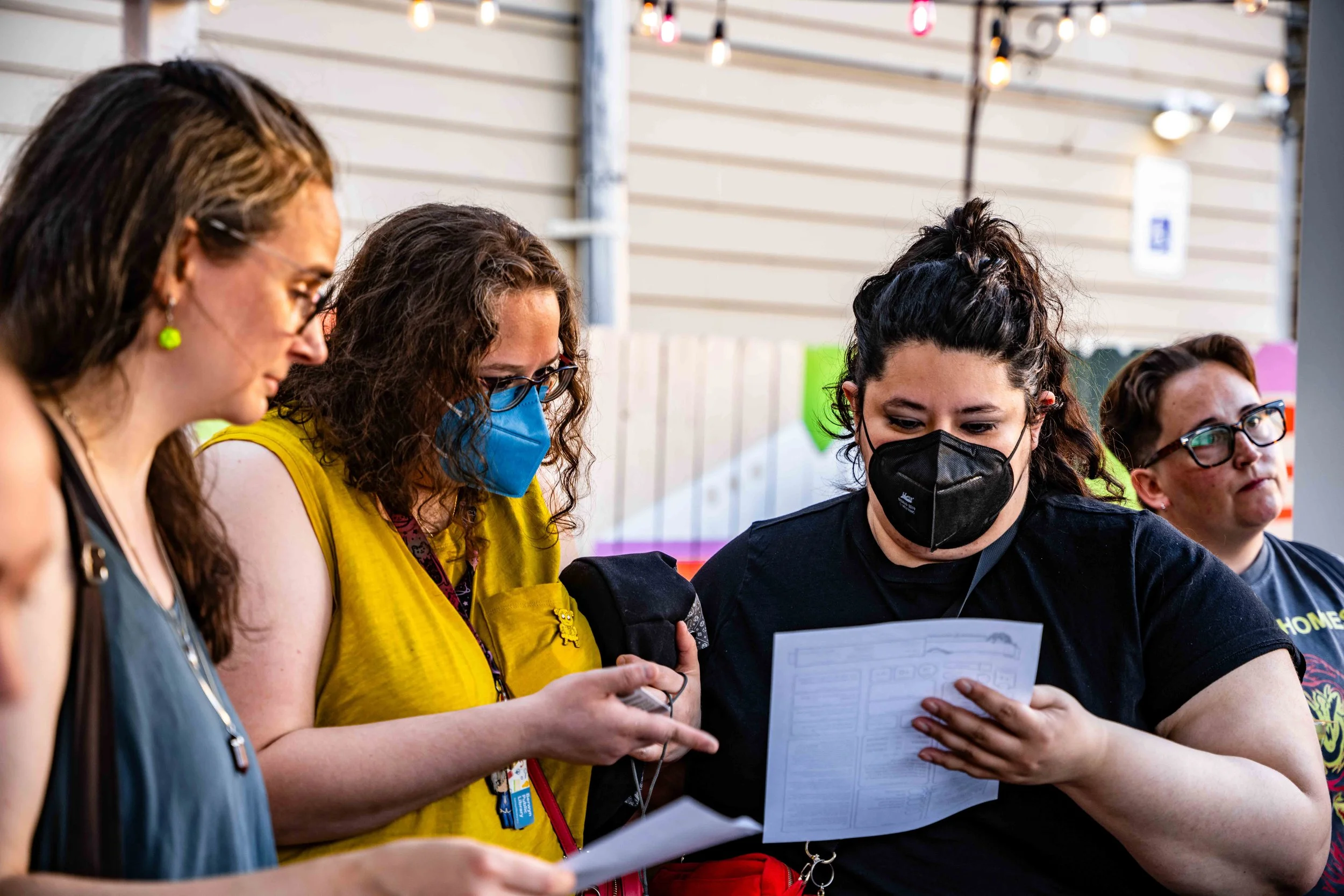
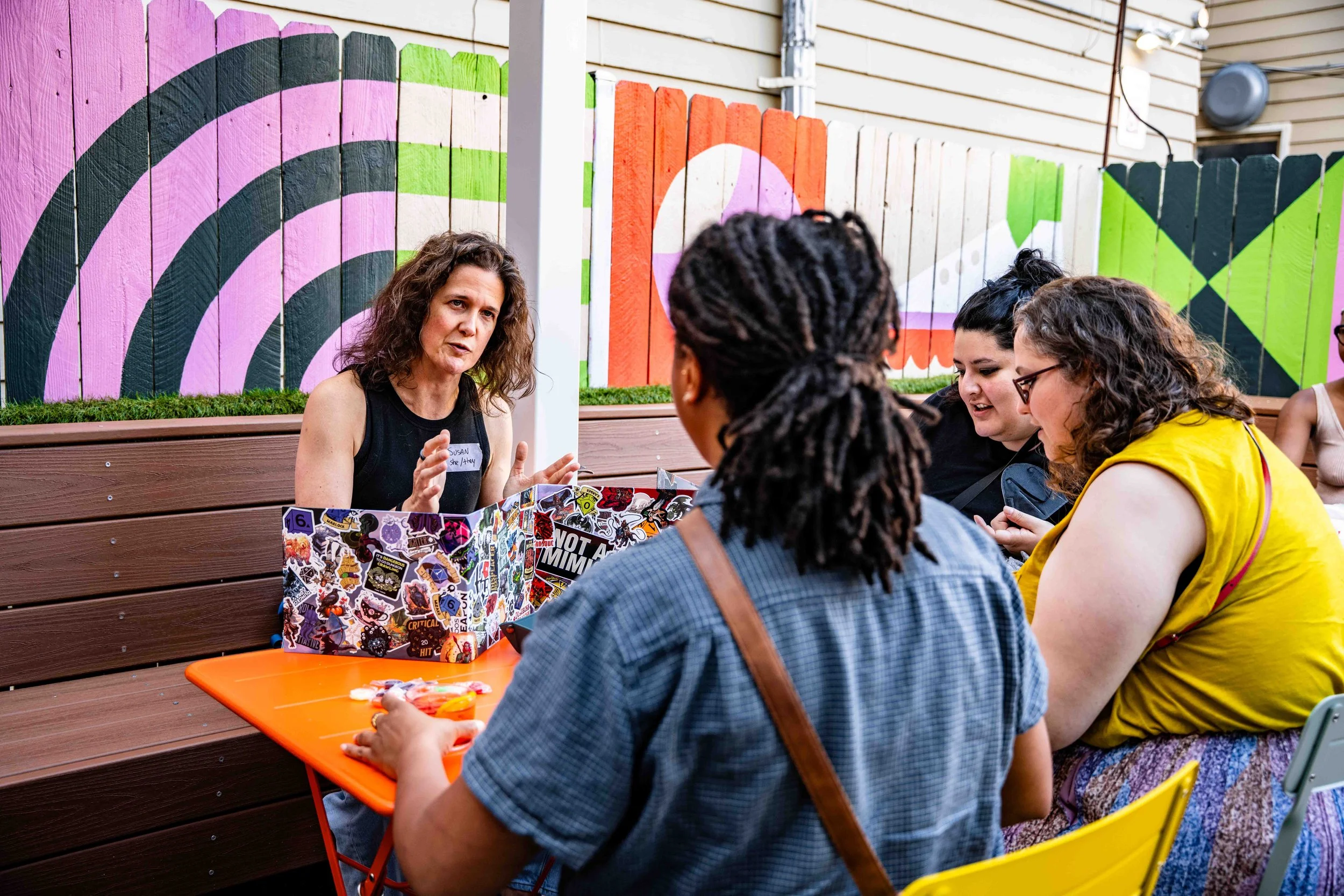
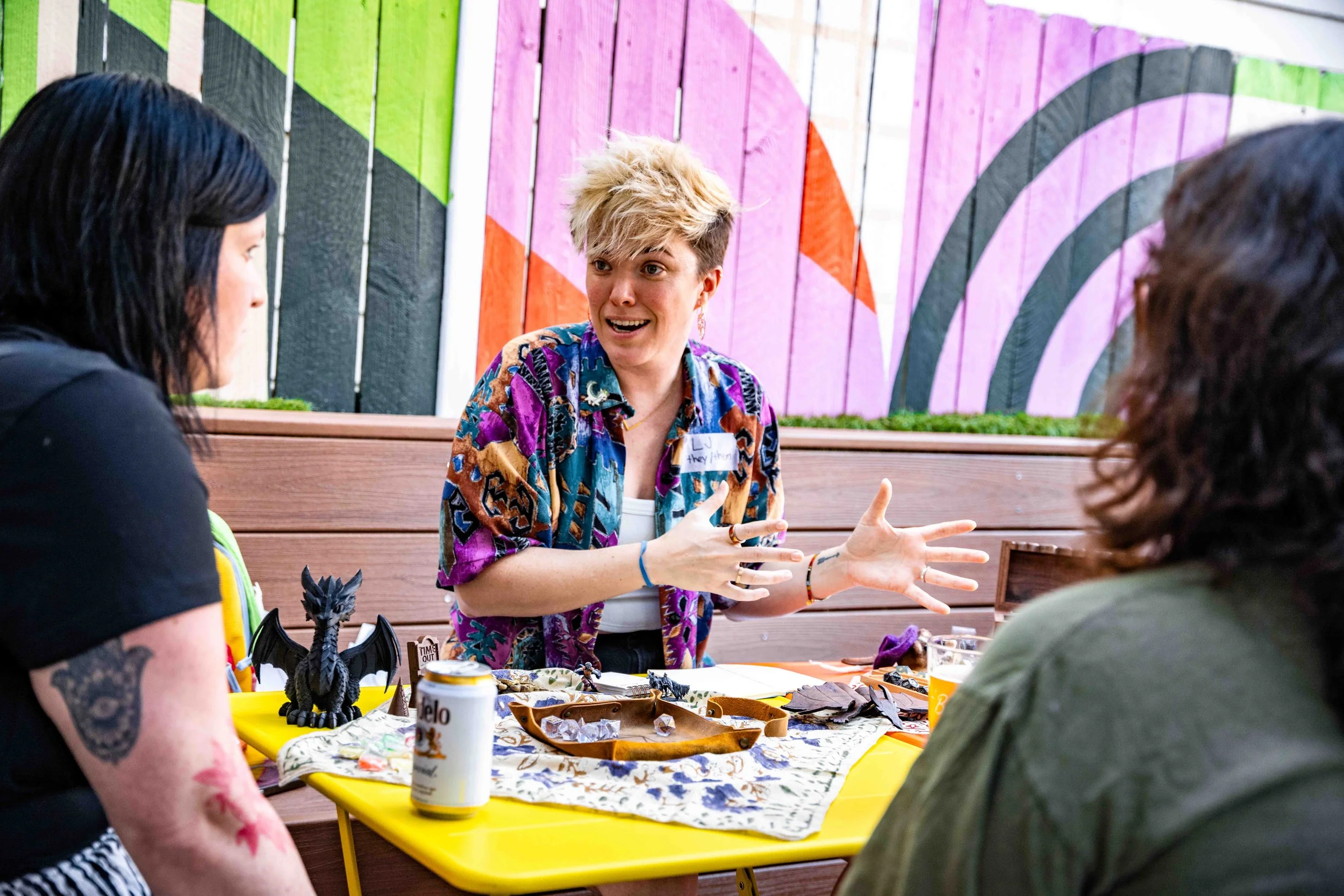
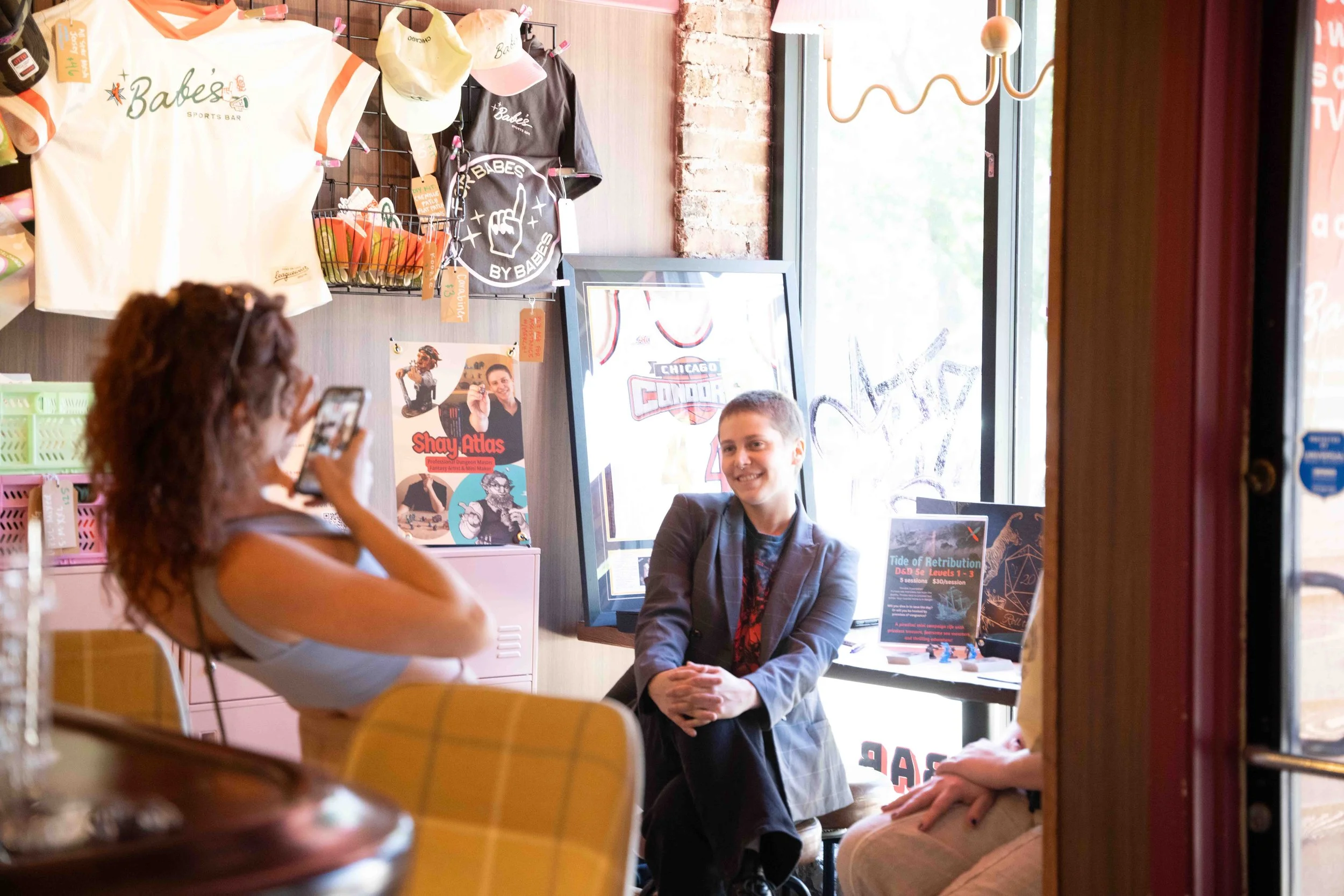
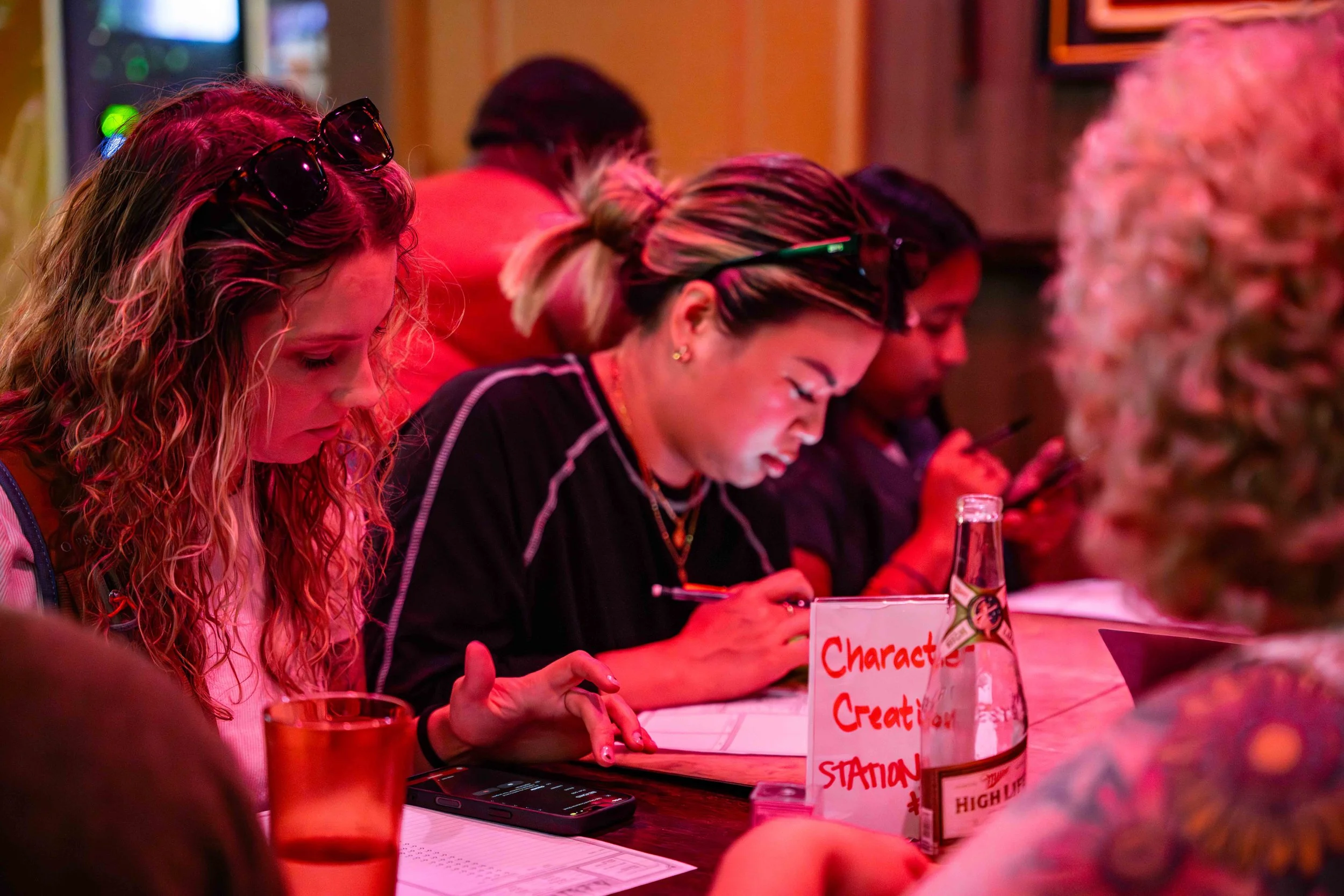
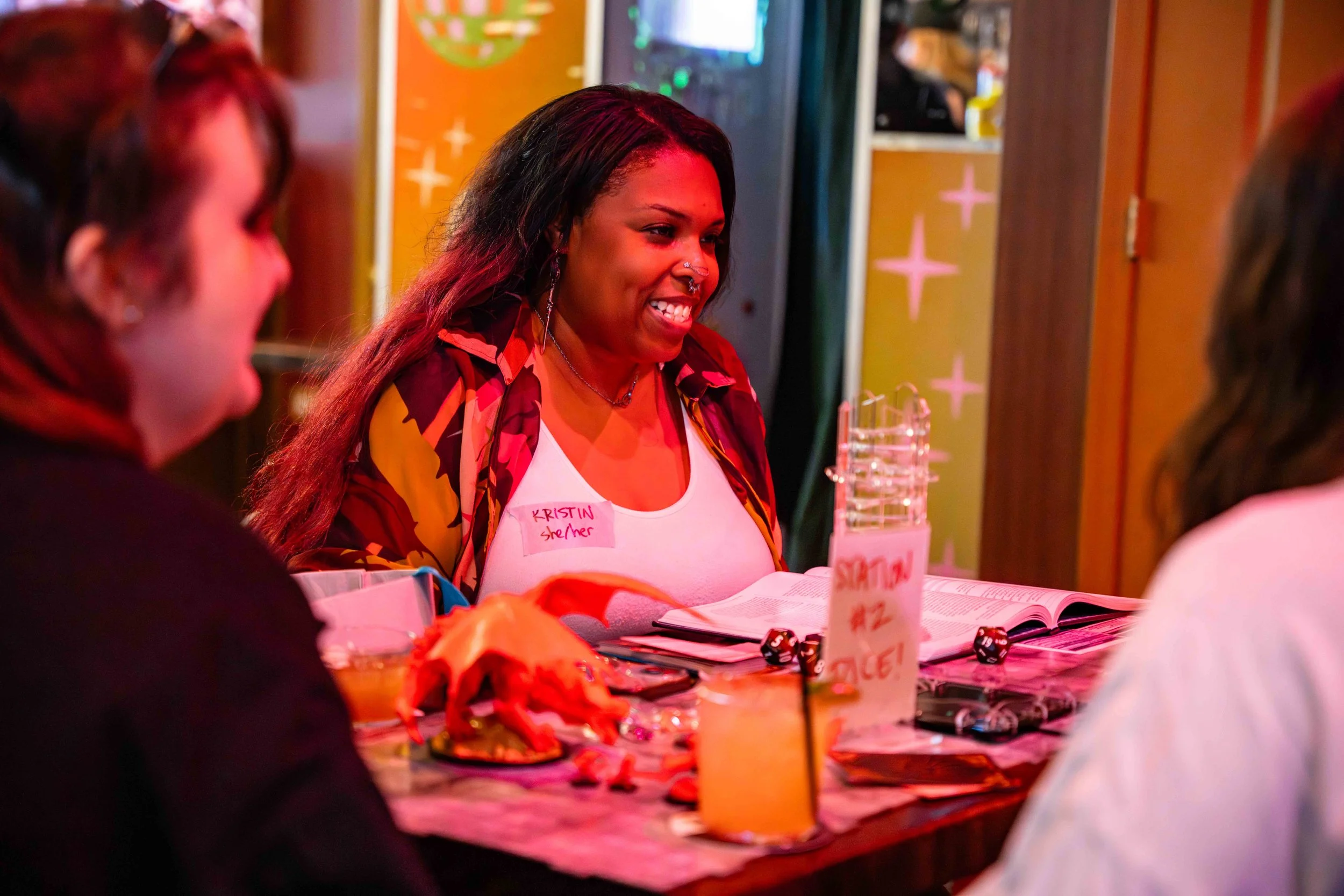
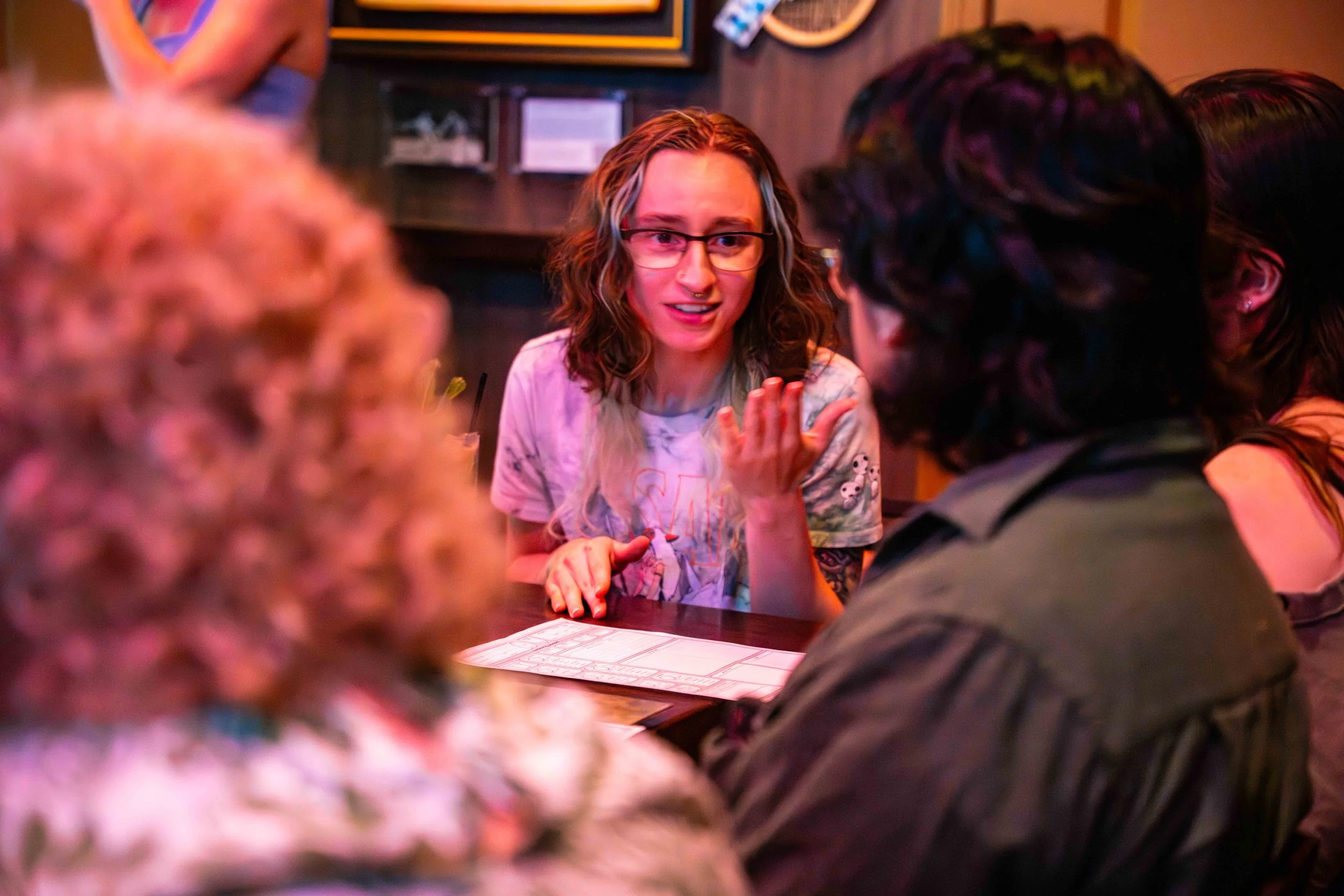
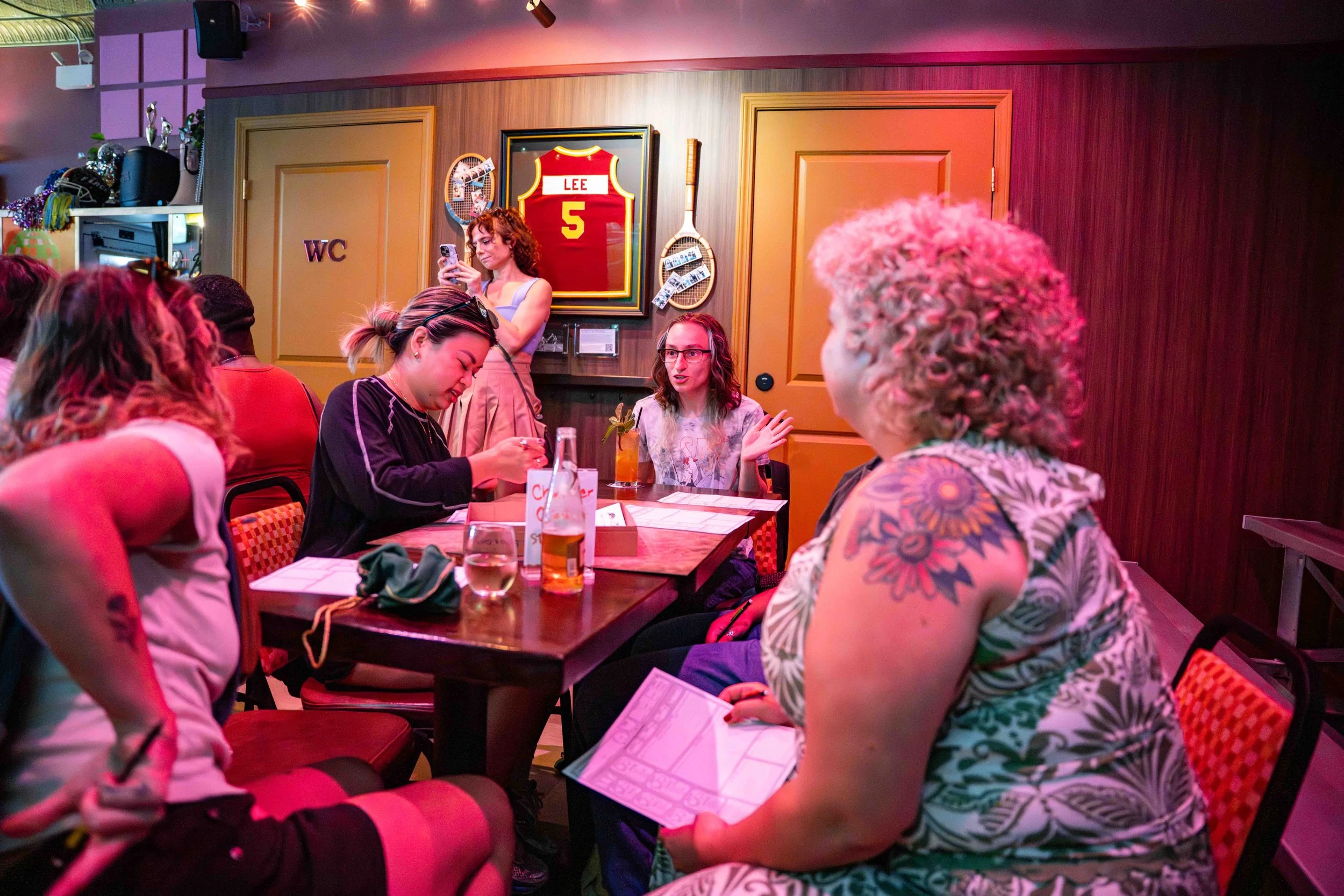
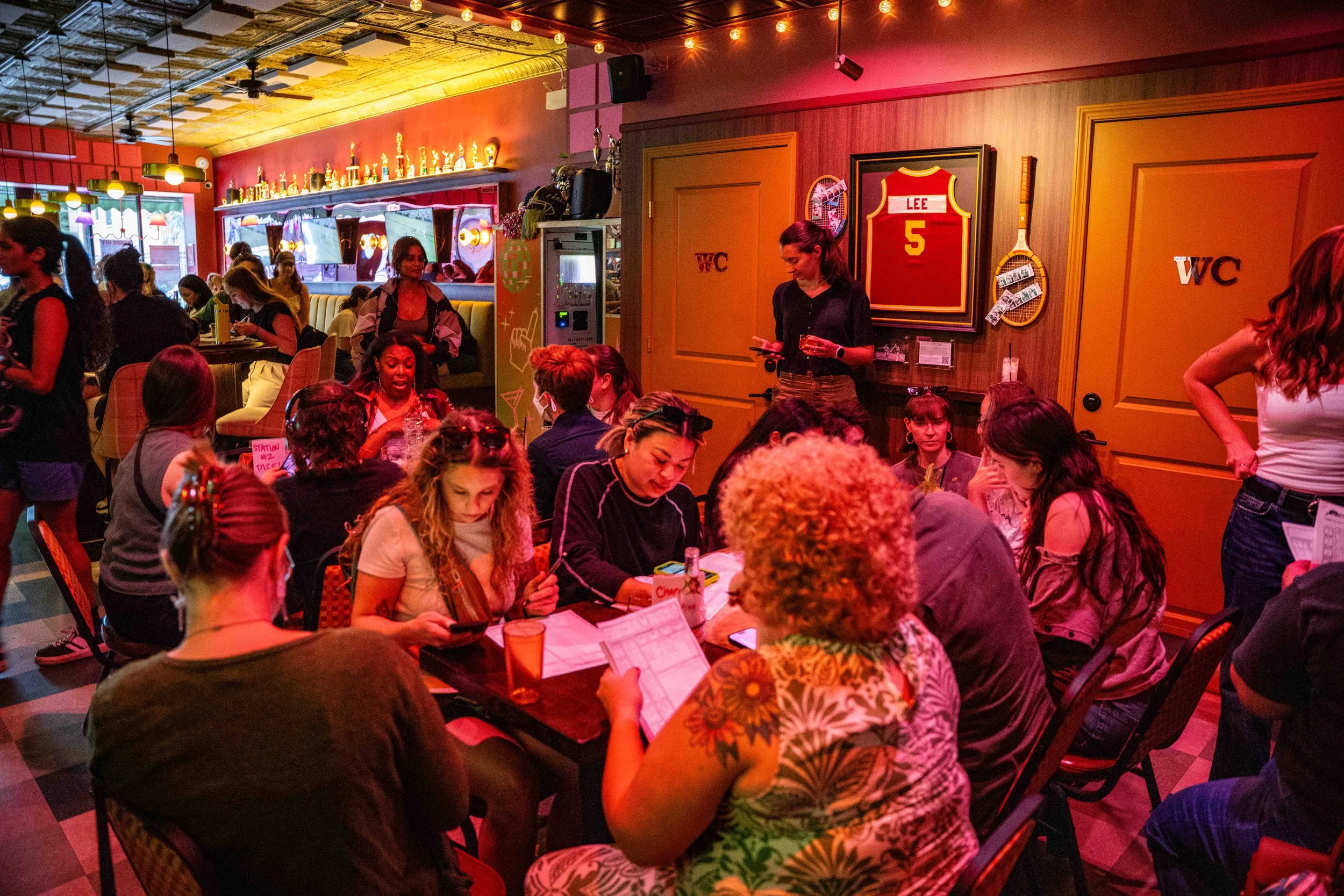
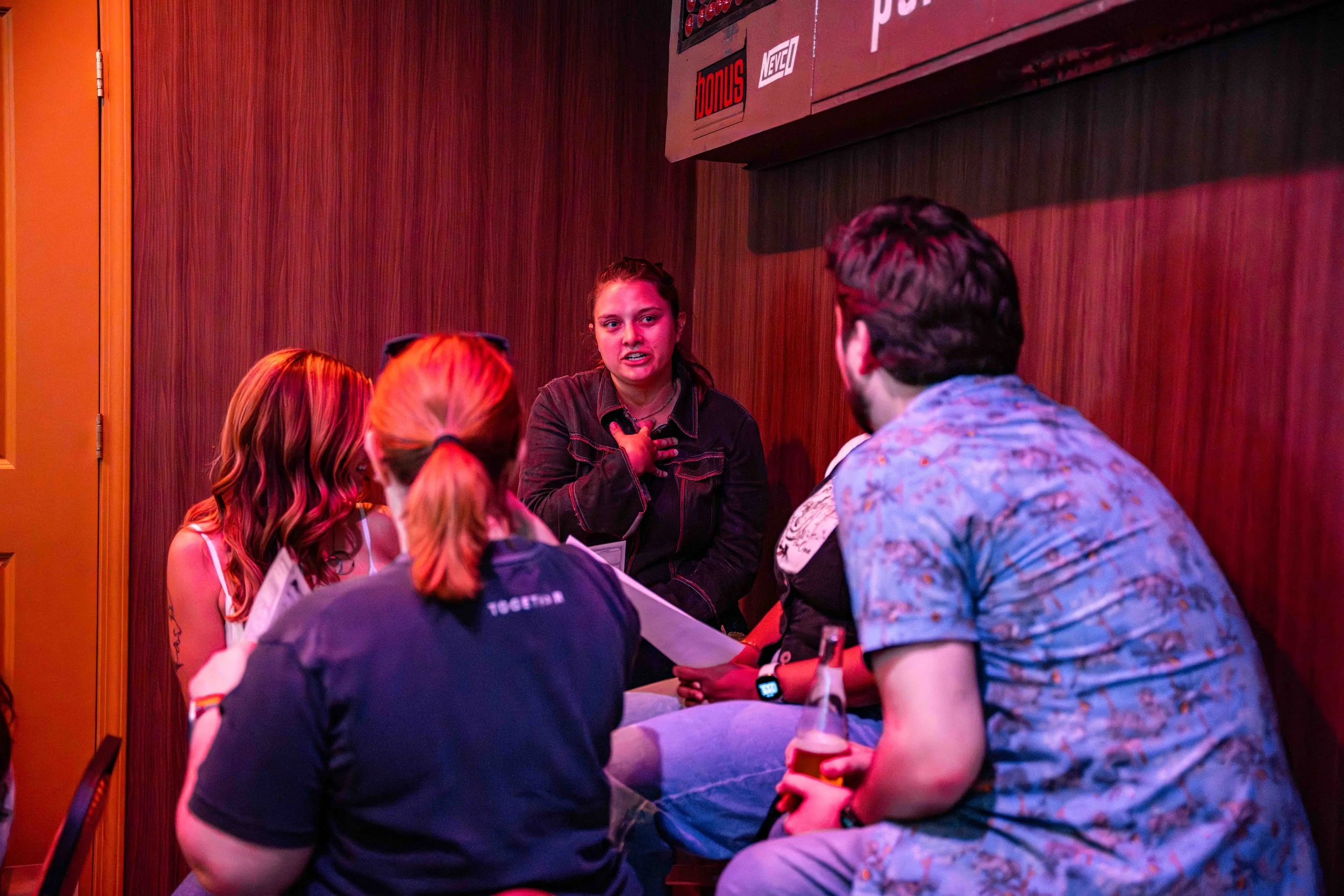
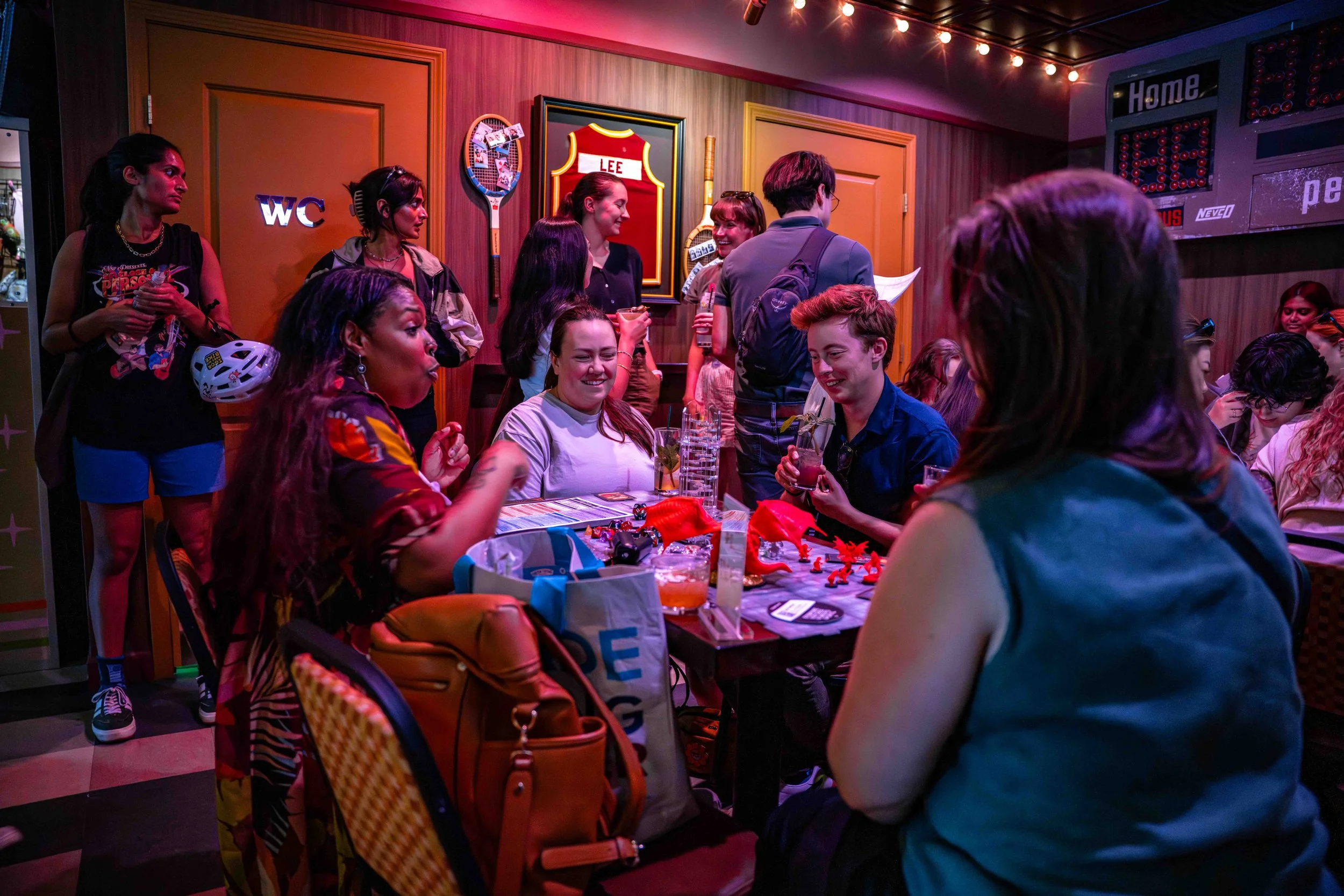
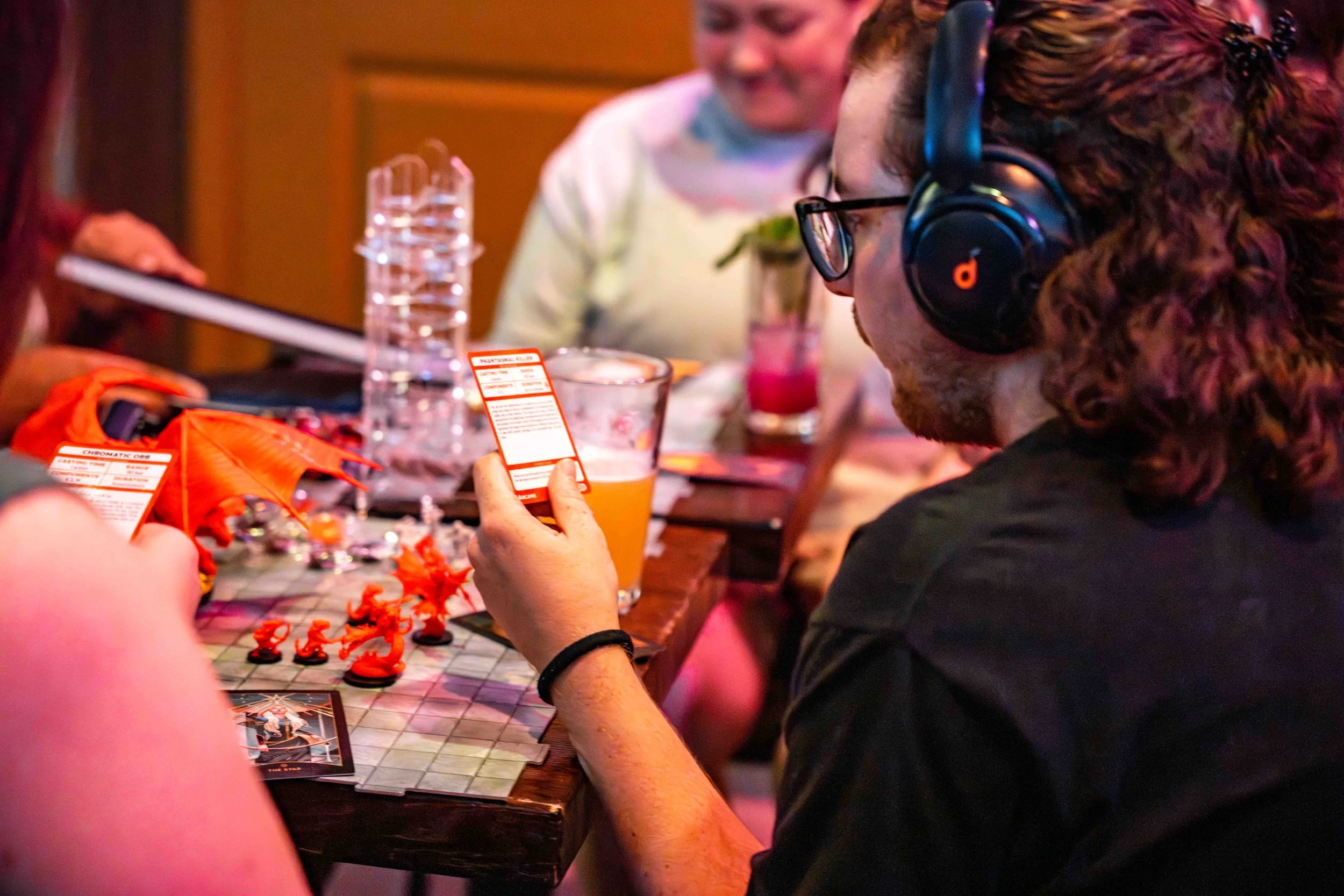
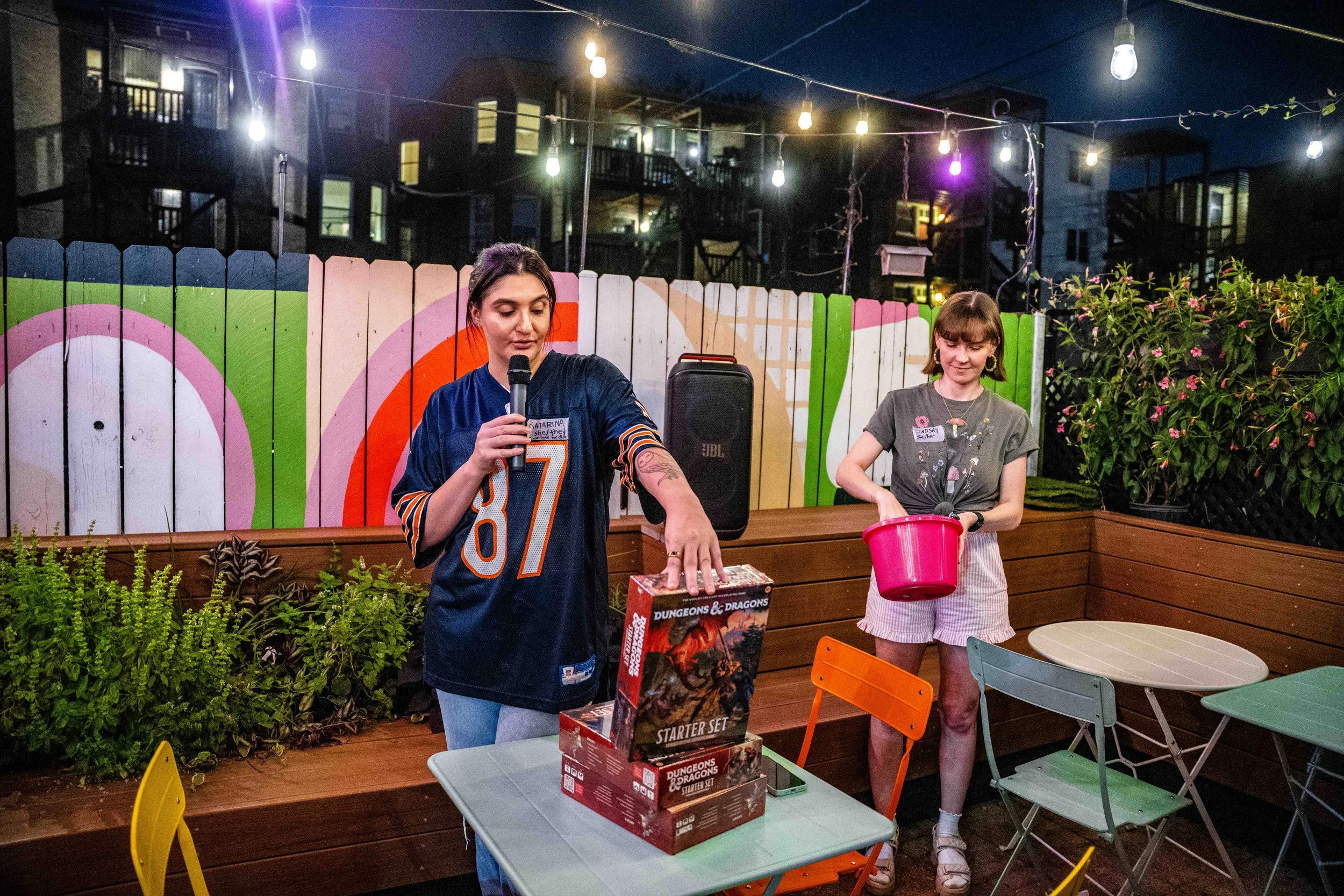
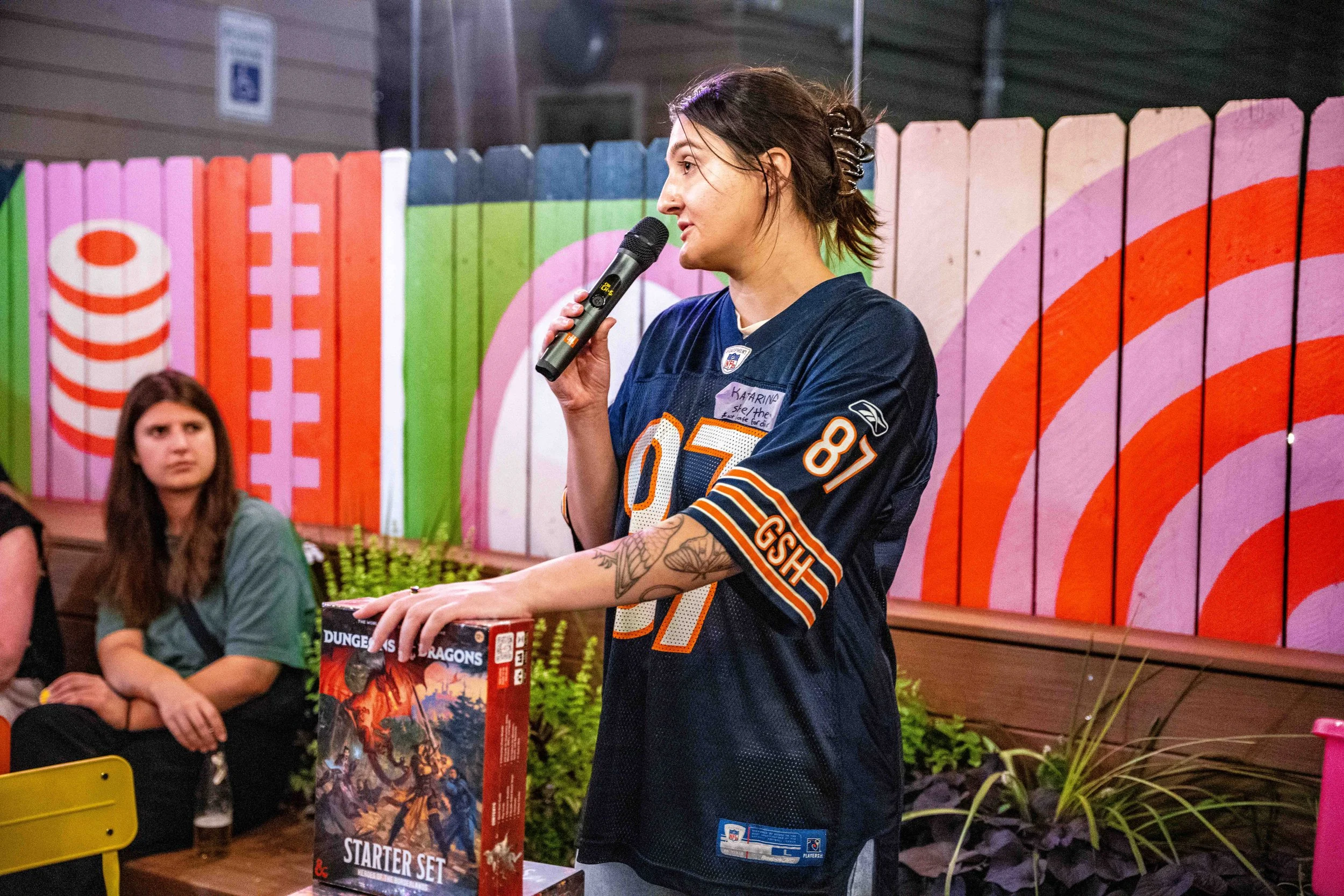
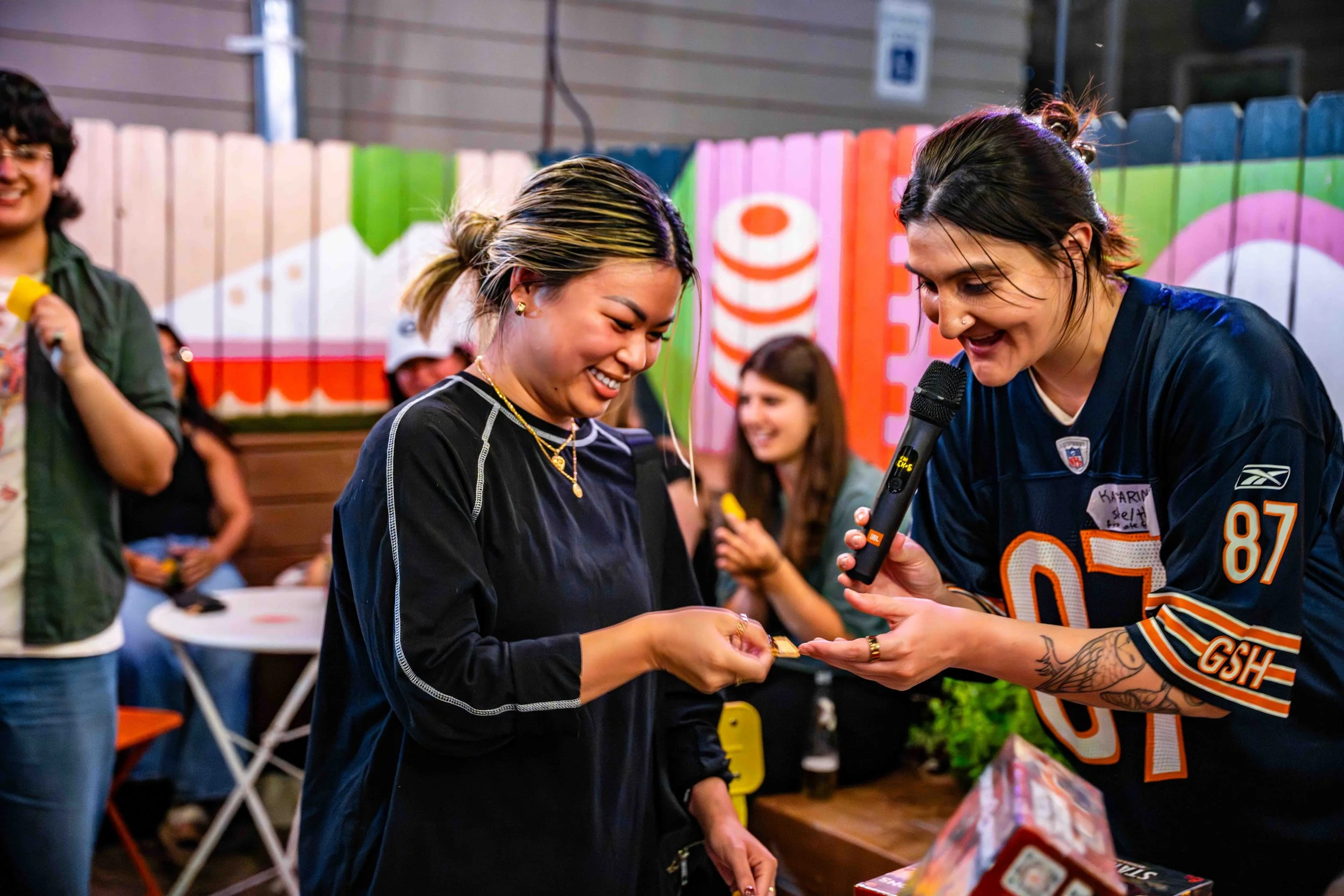
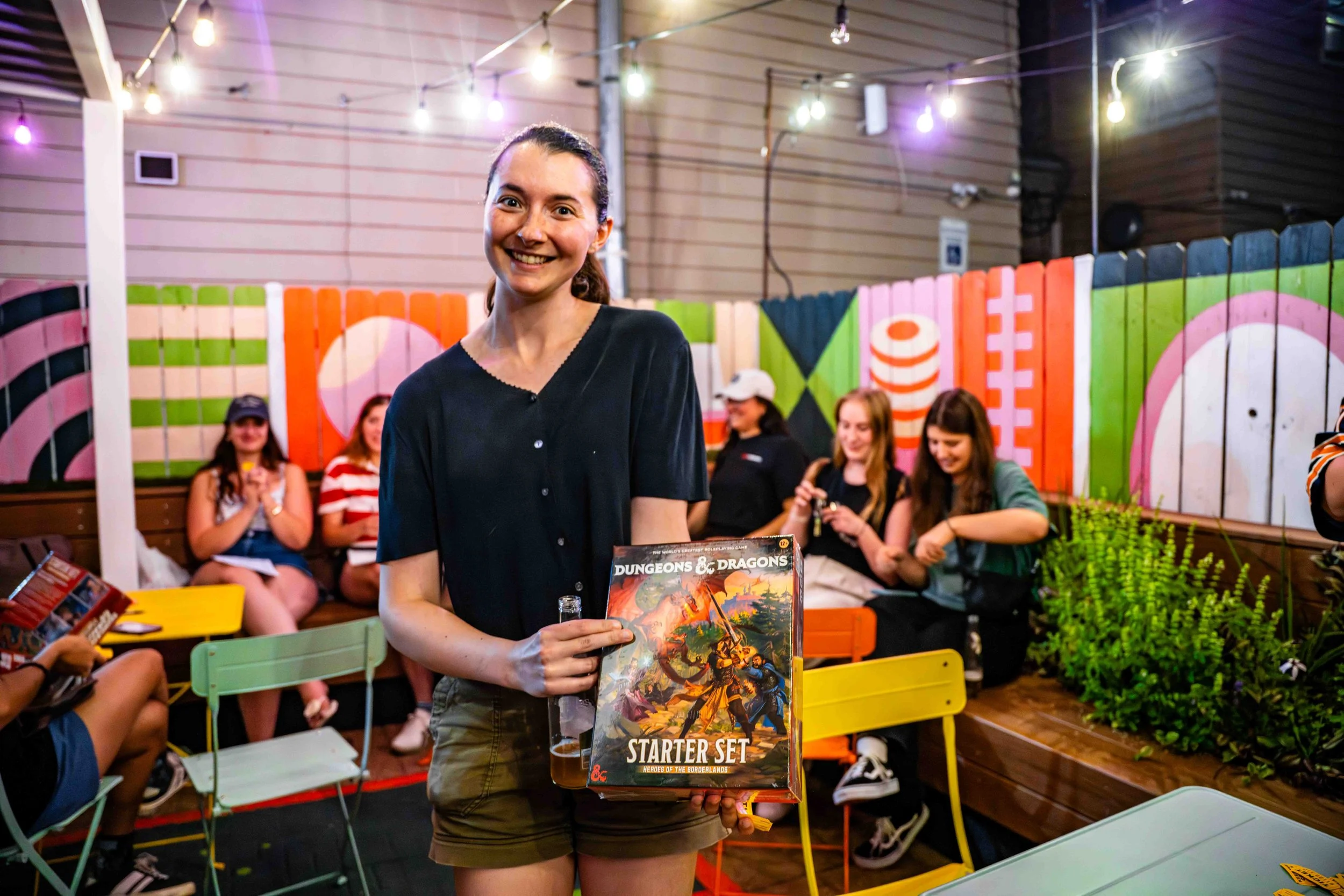
We held the event at Babe’s, a sports bar that shows women’s sports, and more than seventy-five women and femmes came through the doors. We had imagined a fairly straightforward learn-to-play event: short roleplaying encounters, combat encounters, stations for learning the dice, and opportunities to get a sense of what actually happens when a group of people sits around a table and decides to spend several hours pretending to be adventurers. In other words, we expected a lot of beginners.
What we heard that night, over and over, was that many people already knew how to play. Again and again, we heard some version of the same thing: I know D&D. I just wanted to meet other people who play.
This was a little strange to hear after spending so much time thinking about the problem as an introductory one. We had imagined the obstacle as knowledge. Here were people telling us that knowledge was not necessarily the obstacle at all.
Instead, they wanted to talk about the hobby without having to establish their credentials first. They wanted a room in which their interest in tabletop gaming could simply exist, without being treated as an eccentricity that needed explanation.
There is a particular pleasure in discovering that the problem you have been trying to solve is slightly different from the one people are actually experiencing. She Rolls was conceived as a way of inviting women and femmes into tabletop gaming. The people who came gave us a more complicated answer about what that invitation might mean.
Some people needed the rules.
Some people needed a group.
Some people needed a reason to walk into the room.
Some people apparently just needed to know that there would be other women there.
The event did not entirely capture the new-player audience we had imagined. That was disappointing. It was also useful. Community is difficult to measure when the thing you are trying to create is, essentially, a feeling of social possibility. You can count tickets. You can count attendees. You can count people who learned what a saving throw is. It is harder to count the person who left with someone's Discord handle, or the two people who discovered they both wanted to run a campaign, or the person who had been looking for a group and finally found one.
Those are the things that happen around the edges of an event. They may even be the event.














Keeping the Chairs Out
We’ve been given a lot to think about as we look toward future programming. There is interest in workshops for women and femmes who want to learn how to run games themselves, in one-shot days that can make it easier to meet a group without committing to a long campaign, and in social events built simply around the pleasure of being around other people who understand why you would voluntarily spend a Thursday night arguing about whether your imaginary grung rune knight should open the absolutely cursed door.
While our original question was how to get more people to play, what we’ve found is that the more interesting question may be what happens after someone decides they want to.
A hobby can become popular without becoming hospitable. It can become culturally ubiquitous while still carrying the old assumptions of the places, and people, where it began. It can be easier than ever to watch, read about, stream, purchase, and discuss, while the actual experience of sitting down with other people and playing remains strangely dependent on whether you know where and how to find five people who have four hours on a Thursday and an apartment with a table big enough to do so.
So we want to keep doing things for the girlies. We want to keep making room for people who might not consider themselves experts, but who are die-curious and want to learn more about the hobby. We want to make it easier to try something new, whether that means learning to play D&D, picking up a system you’ve never heard of, learning how to run a game yourself, or finding a group of other people who are just as excited to figure it out as you are. Teach a man to fish and all that. Except it’s not men and fish. It’s girlies and dice.
There is a version of community-building that imagines the goal as making the door wider. There is another, more ordinary and probably more durable version, in which you keep putting chairs around the table until people stop wondering whether they were invited.
That is what we want to keep doing: putting out chairs. Making room. Leaving the door open long enough for someone to decide they belong inside.
And, yes, girlie is a state of mind.

This article was written by CTGA board member Katarina, one of the organizers of the She Rolls Initiative. If you’d like to keep the conversation going, join us over on Discord and keep an eye out for future events!
Photography by: Zack Keltner

Disclaimer: The information in this blog and on www.chicagotga.org is presented for educational and entertainment purposes. Any statistics, recommended products, or other information is researched in good faith, but no warranty is made to the completeness nor accuracy of the source. All written and multimedia content published here is the intellectual property of Chicago Tabletop Gaming Association (CTGA) or contributing community members and is not for reproduction or sale by third parties. By accessing this site and all its materials, you agree to and acknowledge these terms.
